
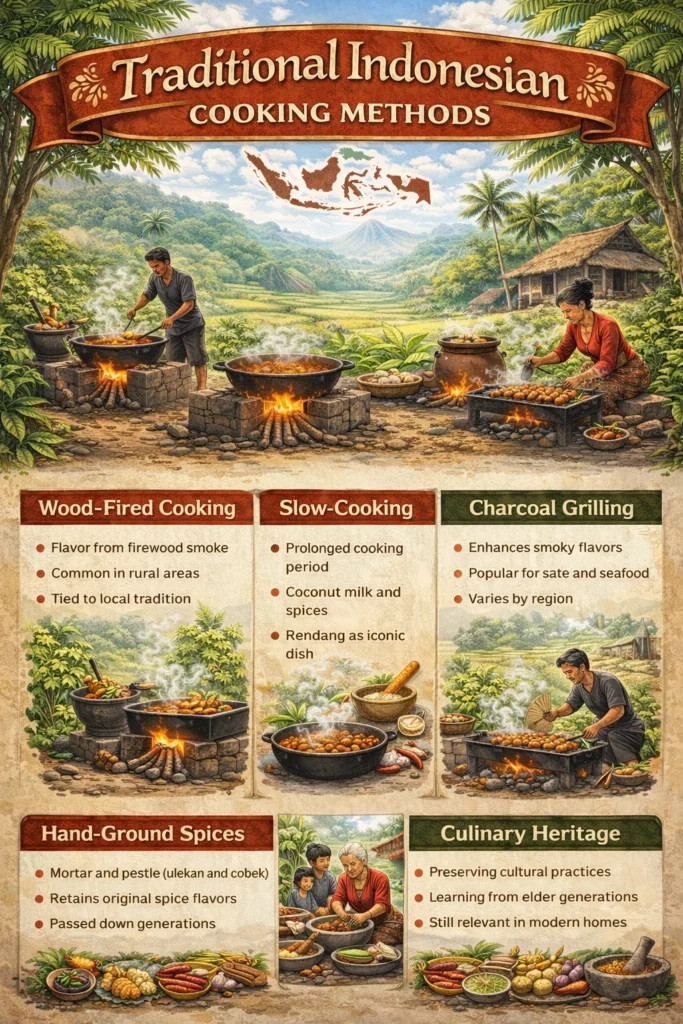
Traditional Indonesian cooking methods are deeply rooted in everyday life, shaping the rich flavors and aromas found in local dishes across the archipelago. From wood-fired stoves in rural kitchens to slow-cooking techniques that require patience and care, these methods are essential in preserving the authenticity of Indonesian cuisine. Each cooking process reflects a close relationship between people, nature, and cultural heritage.
Understanding these traditional techniques helps explain why Indonesian food tastes so distinctive and meaningful. Many of these methods are closely connected to iconic dishes and regional food cultures explored in our main guide on traditional Indonesian food. By exploring how food is prepared, you gain deeper insight into how culinary traditions continue to live on in Indonesian households today.
QUICK VIEW
What Are Traditional Indonesian Cooking Methods?
Traditional Indonesian cooking methods refer to long-established techniques used by communities across the archipelago to prepare food in ways that preserve flavor, culture, and identity. These methods are shaped by tradition, environment, and daily life, forming the foundation of Indonesia’s diverse culinary heritage.
Definition and Cultural Background of Indonesian Cooking Techniques
Traditional Indonesian cooking techniques are methods passed down through generations, primarily through hands-on practice within families and communities. These techniques include slow-cooking, charcoal grilling, and hand-grinding spices using traditional tools. Rather than relying on written recipes, knowledge is transferred through observation and experience.
Culturally, cooking is viewed as a shared and meaningful activity. Food preparation often involves multiple family members, especially during ceremonies, religious events, or communal gatherings. Through these moments, cooking techniques become a way to preserve cultural values.
As a result, Indonesian cooking techniques represent more than culinary skill. They symbolize continuity, patience, and respect for tradition. This cultural background explains why traditional methods remain relevant even in modern kitchens.
Why Cooking Methods Matter in Traditional Indonesian Food
Cooking methods play a central role in defining the character of traditional Indonesian food. Techniques such as long simmering allow spices to fully develop and blend, creating complex and layered flavors. Without these processes, many iconic dishes would lose their distinctive taste.
Beyond flavor, cooking methods also influence texture, aroma, and nutritional balance. Traditional techniques evolved to make the most of local ingredients while ensuring food remained satisfying and nourishing. These methods reflect practical wisdom developed over generations.
Because of this, authenticity in Indonesian cuisine depends heavily on technique. Ingredients alone are not enough to recreate traditional dishes. The way food is cooked is inseparable from the identity of traditional Indonesian food.
How Geography and Local Resources Shape Cooking Styles
Indonesia’s vast geography strongly influences its cooking styles. As an archipelago with diverse climates and ecosystems, each region adapts its cooking methods to local conditions. Coastal communities favor grilling and smoking, while inland areas rely more on boiling and slow-cooking.
Local resources such as firewood, coconut husks, clay cookware, and stone tools shape how food is prepared. Where wood is abundant, open-fire cooking remains common. Regions rich in spices emphasize grinding and layered seasoning techniques.
These geographic and environmental factors create a wide variety of regional cooking styles. Rather than a single uniform approach, Indonesian cuisine reflects many localized traditions. This diversity is one of the strongest elements of Indonesia’s culinary heritage.
Wood-Fired Cooking in Indonesian Households
Wood-fired cooking is one of the oldest and most enduring cooking methods in Indonesian households. Long before modern appliances became common, families relied on firewood to prepare daily meals, shaping distinctive flavors and cooking habits. This method remains closely associated with tradition, memory, and cultural continuity.
Traditional Wood-Fired Stoves in Rural and Urban Homes
Traditional wood-fired stoves have long been a central feature in Indonesian kitchens, particularly in rural areas. These stoves are often built from clay, stone, or brick and designed to accommodate firewood as the primary heat source. Their simple structure allows cooks to control heat manually through experience rather than precise measurement.
In urban homes, wood-fired stoves are less common but still present in older neighborhoods or traditional households. Some families maintain them alongside gas stoves for specific dishes that require slow and steady heat. This coexistence reflects a balance between tradition and practicality.
The continued use of wood-fired stoves highlights their cultural significance beyond functionality. They represent a connection to ancestral cooking practices. For many households, keeping a traditional stove is a way of preserving identity within changing environments.
How Firewood Influences Flavor and Aroma
Firewood plays a direct role in shaping the flavor and aroma of traditional Indonesian food. Different types of wood produce varying levels of heat, smoke, and fragrance, subtly affecting the final taste of a dish. This natural variation adds depth that modern heat sources often lack.
Slow and uneven heat from firewood allows food to cook gradually, helping spices release their full aroma. Smoke from burning wood can also infuse ingredients with a distinctive earthy note. These elements contribute to flavors that are difficult to replicate using gas or electric stoves.
Because of this, many traditional dishes are closely associated with wood-fired cooking. The method enhances sensory qualities that define authenticity. Flavor, aroma, and texture are shaped as much by firewood as by ingredients.
Cultural Meaning of Cooking with Firewood
Cooking with firewood holds deep cultural meaning in many Indonesian communities. It is often associated with family gatherings, communal meals, and ceremonial events. The act of tending a fire becomes part of the shared cooking experience.
In many households, learning to cook over firewood is a rite of passage. Knowledge about fire control and timing is passed from elders to younger generations. This process reinforces respect for tradition and collective learning.
Beyond practicality, firewood cooking symbolizes patience and care. It reflects a slower approach to food preparation that values process as much as outcome. These values remain central to traditional Indonesian food culture.
Wood-Fired Cooking vs Gas Stoves
Wood-fired cooking differs significantly from cooking with gas stoves in terms of heat control and cooking rhythm. Gas stoves offer convenience, speed, and consistency, making them suitable for modern lifestyles. However, they often lack the subtle heat variations found in traditional methods.
Wood-fired stoves require constant attention and experience to manage temperature. While this demands more effort, it allows cooks to respond intuitively to the food. Many believe this interaction produces better results for certain traditional dishes.
Rather than replacing one another, these two methods often coexist. Families choose between them based on time, ingredients, and the type of dish being prepared. This flexibility shows how tradition adapts without disappearing.
Challenges of Preserving Wood-Fired Cooking Today
Preserving wood-fired cooking faces several challenges in modern Indonesia. Urbanization has reduced access to firewood, and housing designs often no longer accommodate traditional stoves. Safety and environmental concerns also influence cooking choices.
Younger generations may prefer faster and more convenient cooking methods. As lifestyles change, fewer people learn how to manage wood-fired stoves. This creates a gap in the transmission of traditional skills.
Despite these challenges, wood-fired cooking continues to survive in many communities. Cultural awareness, culinary tourism, and renewed interest in traditional food help keep the practice alive. Preservation depends on recognizing its value as cultural heritage, not just as a cooking method.
Slow-Cooking Techniques in Traditional Indonesian Dishes
Slow-cooking is a defining characteristic of many traditional Indonesian dishes, emphasizing patience, precision, and respect for ingredients. This method allows flavors to develop gradually, creating depth that cannot be achieved through quick cooking. Across regions, slow-cooking reflects both culinary wisdom and cultural values.
Why Slow-Cooking Is Essential in Indonesian Cuisine
Slow-cooking is essential in Indonesian cuisine because it allows complex spice mixtures to fully integrate with main ingredients. Many traditional dishes rely on layered seasonings that require time to release their aroma and flavor. Cooking slowly ensures these elements blend harmoniously.
This method also helps tenderize tougher cuts of meat and balance strong spices. Rather than overpowering the dish, slow heat softens flavors and textures. The result is food that feels rich yet well-rounded.
Because of this, slow-cooking is not merely a technique but a core principle of Indonesian cooking. It reflects an understanding that good food takes time. This mindset is deeply rooted in traditional culinary practices.
Rendang as the Ultimate Slow-Cooked Dish
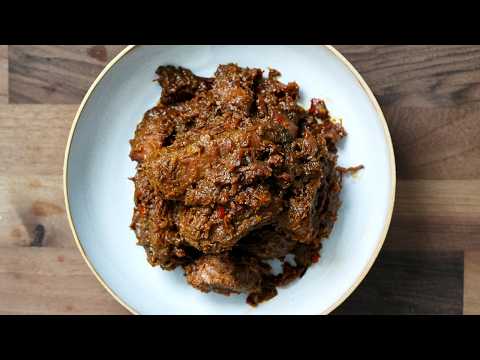
Rendang is widely regarded as the ultimate example of slow-cooked Indonesian food. Originating from West Sumatra, the dish involves simmering meat in coconut milk and spices for several hours. This prolonged process allows the meat to absorb intense flavor.
As rendang cooks, liquid gradually evaporates while spices thicken and coat the meat. The transformation from stew to dry, richly seasoned dish happens slowly and deliberately. Timing and attention are critical to achieving the desired result.
Beyond its taste, rendang represents cultural values such as patience and discipline. The long cooking process is often carried out collectively during special occasions. This reinforces rendang’s status as both a culinary and cultural icon.
Coconut Milk and Spice Absorption Over Time
Coconut milk plays a central role in many slow-cooked Indonesian dishes. When heated gradually, it allows spices to dissolve and spread evenly throughout the dish. This process creates a creamy texture while carrying flavor deep into the ingredients.
Slow-cooking prevents coconut milk from separating too quickly. Gentle heat helps oils and liquids emulsify naturally. This balance is essential for achieving the rich consistency associated with traditional dishes.
Over time, spices such as turmeric, galangal, and chili fully infuse the dish. The result is flavor that feels layered rather than sharp. This absorption process explains why time is a crucial ingredient in Indonesian cooking.
Social and Ritual Aspects of Long Cooking Processes
Long cooking processes often take place during communal or ceremonial events. Preparing food over many hours encourages cooperation and shared responsibility. Family members and neighbors may gather to help with different stages of cooking.
These extended preparations turn cooking into a social activity rather than a solitary task. Conversations, storytelling, and collective decision-making happen alongside the cooking process. Food becomes a focal point for strengthening relationships.
In this context, slow-cooking carries symbolic meaning. It represents togetherness, respect for tradition, and the value of shared effort. The time invested in cooking mirrors the importance of the occasion.
Modern Adaptations of Slow-Cooking Techniques
Modern kitchens have introduced new tools that adapt slow-cooking techniques to contemporary lifestyles. Appliances such as slow cookers and pressure cookers reduce cooking time while maintaining flavor. These tools make traditional dishes more accessible.
Despite these adaptations, many cooks still follow traditional steps and spice combinations. The essence of slow-cooking is preserved through careful seasoning and controlled heat. Modern tools are seen as aids rather than replacements.
This adaptation demonstrates how Indonesian cooking traditions evolve without losing identity. Slow-cooking continues to be valued even as methods change. The technique remains relevant in both traditional and modern households.
Charcoal Grilling and Smoking Methods in Indonesia

Charcoal grilling and smoking are essential cooking methods in Indonesian cuisine, especially for dishes prepared outdoors or sold as street food. These techniques rely on natural heat and smoke to enhance flavor while maintaining simplicity. Across regions, grilling and smoking reflect both environmental adaptation and culinary tradition.
Traditional Charcoal Grilling for Sate and Seafood
Traditional charcoal grilling is widely used to prepare sate and a variety of seafood dishes in Indonesia. Skewered meats are grilled slowly over glowing charcoal, allowing fat to drip and flare, enhancing flavor. This method is commonly seen in street stalls and night markets.
For seafood, charcoal grilling preserves freshness while adding a subtle smoky note. Fish, squid, and shellfish are often seasoned lightly to let natural flavors stand out. The grill provides even heat that cooks food thoroughly without drying it out.
This approach emphasizes skill and timing rather than complex equipment. Grilling requires constant attention and experience to avoid burning. As a result, the cook’s expertise plays a crucial role in the final taste.
How Charcoal Enhances Smoky Flavors
Charcoal enhances flavor by producing steady heat and aromatic smoke. Unlike gas flames, burning charcoal releases compounds that interact with food surfaces. This creates a smoky aroma that is closely associated with traditional Indonesian grilled dishes.
The type of charcoal used can influence flavor intensity. Coconut shell charcoal, for example, burns hot and clean while adding subtle fragrance. This natural variation contributes to distinctive taste profiles.
Because of these qualities, charcoal grilling produces depth that is difficult to replicate with modern appliances. Smoke becomes an ingredient rather than a byproduct. This is why many traditional recipes specify charcoal grilling.
Regional Variations of Grilled Indonesian Dishes
Grilled dishes vary significantly across Indonesia’s regions. In Java, sate is often sweet and savory, while in Madura it features bold peanut sauces. Each variation reflects local tastes and ingredient availability.
In coastal areas, grilling emphasizes seafood such as fish and shellfish. Seasoning tends to be simple, highlighting freshness and natural sweetness. Inland regions focus more on meat-based grilling.
These regional differences show how grilling adapts to local culture. Rather than a single style, Indonesian grilling represents many localized traditions. This diversity strengthens the country’s culinary identity.
Smoking Techniques in Coastal and Island Communities
Smoking is commonly used in coastal and island communities to preserve fish and enhance flavor. The technique involves exposing food to low heat and smoke over extended periods. This method extends shelf life while intensifying taste.
Smoked fish products often serve as staples in daily meals. They are used in sambal, soups, or eaten with rice. Smoking allows communities to manage surplus catch efficiently.
Beyond preservation, smoking carries cultural significance. It reflects sustainable use of resources and traditional knowledge. These techniques remain important in regions with strong fishing traditions.
Traditional Grilling vs Electric Grills
Traditional grilling differs greatly from electric grilling in both process and outcome. Electric grills offer convenience and consistent temperature control. However, they lack the smoke produced by charcoal.
Charcoal grilling requires hands-on management of heat and timing. While more demanding, it allows cooks to respond intuitively to food. Many believe this interaction produces better flavor.
Rather than replacing traditional methods, electric grills provide alternatives. Some households use both depending on context. This coexistence reflects adaptation without abandoning tradition.
Hand-Ground Spices and Traditional Cooking Tools

Hand-ground spices and traditional cooking tools are fundamental to Indonesian cooking methods. These tools shape not only flavor but also the rhythm and philosophy of food preparation. Despite modern appliances, many households continue to rely on traditional tools to preserve authenticity.
Mortar and Pestle (Ulekan and Cobek) in Indonesian Kitchens
The mortar and pestle, locally known as ulekan and cobek, are essential tools in Indonesian kitchens. Made from stone, clay, or wood, they are used to grind spices into fresh pastes. These tools allow cooks to control texture and consistency.
Using an ulekan and cobek requires physical effort and skill. The grinding motion releases natural oils from spices such as garlic, chilies, and shallots. This process enhances aroma and depth of flavor.
Beyond functionality, these tools hold cultural value. They are often kept for decades and used daily. Their presence reflects continuity in traditional cooking practices.
Why Hand-Ground Spices Taste Different
Hand-ground spices taste different because the grinding process preserves essential oils and natural moisture. Unlike electric blending, manual grinding avoids excessive heat. This helps maintain the integrity of each ingredient.
The texture achieved through hand grinding is also distinctive. Spices become paste-like rather than overly smooth. This texture allows flavors to release gradually during cooking.
As a result, dishes prepared with hand-ground spices feel richer and more aromatic. The difference is subtle but noticeable. Many traditional cooks consider this step essential for authentic flavor.
Traditional Cooking Tools Passed Through Generations
Traditional cooking tools are often passed down from one generation to the next. Items such as stone mortars, clay pots, and wooden utensils carry family history. They become part of everyday life.
Learning to use these tools usually happens informally. Children observe and assist elders during food preparation. Through this process, cooking knowledge is transferred naturally.
This generational continuity reinforces cultural identity. Tools become symbols of shared experience and memory. They connect present-day cooking to ancestral practices.
Differences Between Hand-Ground and Blender-Made Spices
Hand-ground spices differ significantly from blender-made pastes. Blenders produce uniform textures quickly, but often introduce heat and excess liquid. This can dull aroma and alter flavor.
Manual grinding allows better control over pressure and movement. Spices are crushed rather than cut, releasing oils more gradually. This results in a more complex taste profile.
While blenders offer convenience, many cooks prefer hand grinding for traditional dishes. The choice reflects priorities between speed and authenticity. Both methods coexist in modern kitchens.
Keeping Traditional Tools Relevant in Modern Cooking
Keeping traditional tools relevant requires adaptation to modern lifestyles. Many households combine traditional and modern equipment depending on time and dish type. This flexibility supports continuity.
Culinary education and food culture movements also play a role. Cooking classes and media highlight the value of traditional tools. This encourages renewed interest among younger generations.
By continuing to use and value these tools, Indonesian cooking traditions remain alive. Relevance comes not from resisting change but from integrating tradition into modern life.
Preserving Traditional Cooking Methods in Modern Indonesian Kitchens
As lifestyles and technology evolve, traditional Indonesian cooking methods face both challenges and opportunities. While modern kitchens offer speed and convenience, many households continue to preserve traditional techniques as part of cultural identity. This balance reflects how tradition adapts rather than disappears.
How Families Pass Down Cooking Techniques
Families play a central role in passing down traditional cooking techniques in Indonesia. Knowledge is often shared informally through daily practice rather than written instruction. Children learn by observing and assisting elders in the kitchen.
This hands-on learning builds familiarity with ingredients, tools, and timing. Cooking becomes a shared activity that strengthens family bonds. Techniques are absorbed naturally through repetition and experience.
Through this process, cooking knowledge survives across generations. Even as recipes evolve, foundational methods remain intact. Family kitchens thus act as living spaces of cultural transmission.
Traditional Cooking Methods in Urban Households
In urban households, traditional cooking methods coexist with modern appliances. Limited space and fast-paced routines encourage adaptation rather than abandonment. Many families choose traditional techniques for special dishes.
Some urban cooks reserve slow-cooking or hand-ground spices for weekends or celebrations. This selective use reflects practicality while maintaining tradition. The kitchen becomes a space of negotiation between past and present.
Urban settings also encourage creativity in preserving tradition. Compact tools and modern layouts reshape how techniques are applied. Tradition survives through flexibility and intention.
Role of Food Vendors and Street Food Culture
Food vendors and street food culture play a vital role in preserving traditional cooking methods. Many vendors rely on charcoal grilling, slow simmering, and manual preparation. These practices maintain authenticity in everyday meals.
Street food stalls often serve as informal culinary schools. Customers observe cooking techniques up close, gaining appreciation for traditional methods. This visibility keeps knowledge accessible to the public.
By continuing to use traditional techniques, vendors help sustain culinary heritage. Street food culture ensures that tradition remains visible and relevant. It connects heritage with daily consumption.
Culinary Education and Cultural Preservation
Culinary education contributes to the preservation of traditional cooking methods. Schools, workshops, and community programs document and teach local techniques. This formal approach complements family-based learning.
Media and cultural initiatives also raise awareness about traditional cooking. Documentaries, books, and online content highlight heritage practices. These efforts broaden understanding beyond local communities.
By recognizing cooking methods as cultural assets, education helps protect them. Preservation becomes intentional rather than accidental. This strengthens long-term cultural sustainability.
Why Traditional Cooking Methods Still Matter Today
Traditional cooking methods still matter because they preserve authenticity and cultural meaning. They shape flavors that cannot be replicated through shortcuts alone. Technique remains inseparable from identity.
These methods also promote mindful cooking and connection to ingredients. Slower processes encourage appreciation of food preparation. They counterbalance the speed of modern life.
Ultimately, preserving traditional cooking methods supports cultural continuity. They link past, present, and future through everyday practice. In modern kitchens, tradition remains alive through choice and care.
Frequently Asked Questions About Traditional Indonesian Cooking Methods
Are Traditional Indonesian Cooking Methods Still Used Today?
Yes, traditional Indonesian cooking methods are still widely used today, especially in households, street food stalls, and rural communities. Many families continue to practice techniques such as slow-cooking, charcoal grilling, and hand-grinding spices alongside modern appliances.
Do Traditional Methods Affect Nutrition and Health?
Traditional cooking methods can positively affect nutrition by preserving natural flavors and reducing the need for artificial additives. Slow-cooking and balanced spice use help retain nutrients while enhancing digestibility.
Can Traditional Cooking Be Done in Modern Kitchens?
Traditional Indonesian cooking can be adapted to modern kitchens using contemporary tools such as gas stoves, slow cookers, or blenders. While the tools may change, the core techniques and flavor principles can still be preserved.
Why Do Traditional Indonesian Dishes Take So Long to Cook?
Many traditional Indonesian dishes take a long time to cook because they rely on slow-cooking to develop deep flavors and tender textures. This process allows spices and ingredients to blend fully, creating the dish’s signature taste.
What Cooking Method Defines Indonesian Cuisine Most?
There is no single cooking method that defines Indonesian cuisine, as it varies by region. However, slow-cooking, charcoal grilling, and hand-prepared spice pastes are among the most distinctive techniques found across the archipelago.
Scientific Studies and Research on Traditional Indonesian Cooking Methods
Academic research provides valuable insight into why traditional Indonesian cooking methods remain relevant today. Several studies published in international journals have examined Indonesian cuisine from cultural, ethnographic, and food science perspectives, offering scientific explanations behind long-established culinary practices.
Research in the Journal of Ethnic Foods documents the diversity of Indonesian dishes and preparation techniques, including sambal-making, slow-cooking, and regional cooking traditions. These studies highlight how cooking methods are closely tied to cultural identity and local heritage. You can explore related research through the journal’s official publication platform at https://link.springer.com/journal/42779.
Ethnobotanical studies published in journals such as Biodiversitas examine how Indonesian communities use local spices, herbs, and plants in traditional cooking. These findings show that techniques like hand-grinding spices and slow simmering evolved in response to environmental conditions and resource availability. Selected studies are available at https://smujo.id/biodiv.
Food science research has also explored the chemical impact of traditional cooking techniques. Studies on spice grinding methods demonstrate that manual grinding preserves aromatic compounds more effectively than mechanical blending, helping explain sensory differences in traditional dishes. Related research on food aroma and processing can be found through academic databases such as https://www.sciencedirect.com.
In addition, scientific studies on slow-cooked dishes like rendang analyze how cooking time and coconut milk affect flavor development, texture, and antioxidant properties. These findings support the idea that traditional Indonesian cooking methods are not only cultural practices but also scientifically grounded techniques that enhance food quality.
Conclusion: Traditional Indonesian Cooking Methods as Living Heritage
Traditional Indonesian cooking methods are more than practical techniques for preparing food. They represent accumulated knowledge shaped by culture, geography, and generations of daily practice. From slow-cooking and charcoal grilling to hand-ground spices, these methods define the character and authenticity of Indonesian cuisine.
Despite the rise of modern appliances and faster cooking habits, traditional techniques continue to survive through adaptation. Families, street food vendors, and culinary educators all play a role in keeping these practices relevant. The persistence of these methods shows that tradition can evolve without losing its essence.
Understanding how Indonesian food is cooked offers deeper insight into why it tastes the way it does. Cooking methods influence flavor, texture, aroma, and even the social meaning of meals. They reveal a close relationship between people, ingredients, and environment.
As interest in authentic and culturally rooted food grows worldwide, traditional Indonesian cooking methods gain renewed importance. Preserving these techniques helps protect culinary heritage while inspiring future generations to value patience, craftsmanship, and shared experience. In modern kitchens, tradition remains alive through conscious choice and respect for the past.